Saturday, October 23, 2021

WHAT HAPPENED TO YOUNG ADULTS?

What happened to young adults, and what led to the Generation Gap and the youth culture of rebellion and decadence that continues today? There was a time in America (and Europe) when a teenager was normally considered ready for normal adult work and responsibility, teenage marriage did not involve a high divorce rate, and juvenile crime was not considered normal behaviour. Up till a few decades ago a young lad could join the armed forces at fourteen (with parental consent of course), but this is no longer considered practical. In Bible times a person was considered a young adult at the age of thirteen, but today we have a person called an adolescent, someone who is not physically a child but is not considered a young adult. What happened? Let us look at some of the societal and cultural trends that led to this: 

For much of American history families and society in general were patriarchal, and adults had moral, religious, and social responsibilities to provide for, discipline, and train their children, and care for elderly parents, and parents normally raised up their children to succeed them, and not to merely succeed. Over time government expansion and the Industrial Revolution were allowed to interfere with family relationships and responsibilities. With the Industrial Revolution came Child Labor Laws, some of which made sense while others were absurd. For example, laws originally intended to keep a child whose age is still a single digit from working sixteen hours a day in a sweatshop or coal mine under unhealthy conditions are now used to keep healthy teenagers from doing light work for eight hours or less in air-conditioned buildings. The idea that children should not be taught to work and be responsible and teenagers cannot or should not be expected to handle work and responsibility became popular and accepted. Free public education became compulsory continued education, thus encouraging artificially extended childhood and further enabling indoctrination in secularism and humanism. If movements and legislation to coerce teenagers into staying in school were ultimately based on concern for the interests and welfare of youths, then intelligent and knowledgeable students would be encouraged to get a GED and seek employment or go on to college or vocational school; the real issue is government indoctrination and the expansion of government power. We even have children's courts, or juvenile courts, to impress upon young minds that they are not fully accountable or completely responsible for their behaviour. 

Secular humanism has been invading and dominating public schools, colleges, the media, politics, churches, and religious institutions for over a century.

Humanism replaced integrity, self-respect, and other gentlemanly (or genteel) and feminine characteristics with self-esteem, replaced personal responsibility and accountability with self-esteem and blamed all sorts of sins, personal problems, and social maladies on lack of self-esteem. Humanism has produced a generation where academics and work ethics often suffer because of replacing proficiency with self-confidence and civility and hospitality are often sacrificed on the altar of self.

Secularism replaced Bible principles with secular philosophy and denies the need to look to Scripture for direction in human interactions and relationships.

Women became masculine and men became effeminate or adopted a macho facade, these extremes being contrary to God's design for the male as the Lord's representative and the female as an helpmeet. Feminism encourages women to reject their complementary role and mimic the sexual attitudes, behaviour, and aggressiveness of men and thus relinquish their natural power; this merely fulfills male fantasies and accommodates the baser instincts of men while lowering the respect of men for women instead of encouraging women to be the civilising and stabilising influence on men that they are designed to be. The rise of feminism has been destructive to chivalry and femininity, and role reversals anathematized the need for a woman to be treated like a lady or a gentleman to be respected. The need for true gentlemen and ladies was replaced by “equality;” equals do not complement each other, they compete. God's design for communities, organizations, and the family is hierarchy with a balance between equality of being and functional subordination.

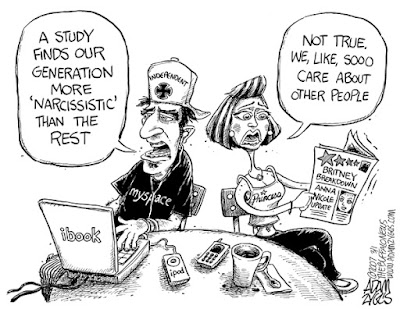
Materialism has produced a society of ungrateful, indulgent, and overbearing people without a sense of thankfulness and appreciation, a generation of selfish expectation where an attitude that we deserve everything prevails.
Widespread lack of parental presence, training, supervision, and participation in the lives of children has had negative effects.

Movies and TV shows often portray Middle School and High School students as small children in the bodies of youths and present this either as typical and expected of every teenager or as an example to emulate. Encouraging extended childhood and discouraging emotional and intellectual growth jeopardizes future relationships, makes people more easily persuaded to reject the influence and values of family and church, and makes people more easily indoctrinated in secularism, humanism, and statism. 

In the Twentieth Century, especially the latter half of the Twentieth Century, some misleading myths and theories were widely accepted even in Christian circles, such as: 

·        The theory of evolution is compatible with Christianity and Bible truth. 

·        Humans are naturally good. (Man can choose to do right, but sin comes naturally because humans are natural-born sinners. How many parents ever had to teach a child how to be bad?) 

·        Satan rules the Earth. (Satan rules in the hearts of unbelievers, "the wicked world system," but God is the present ruler of the Earth and nothing in the Bible ever indicates that God abdicated His throne and turned rulership over to Satan.) 

·        The Bible is only for Christians. (The Bible is God's message to all mankind and provides guidance on every area of human existence and applying Bible teachings benefits both believers and unbelievers. The important difference is that for the unbeliever the Word of God is convicting and for the believer the Word of God is cleansing.) 

·        Bible truths and standards only apply to the church-related part of our lives and do not apply to our secular lives. 

·         It is wrong for a Christian (especially a preacher) to hold a public office or otherwise try to influence society for righteousness. (Daniel 2:48-49; Matthew 5:13-16; Acts 17:6-7; II Corinthians 10:4-6; I Timothy 2:1-2; I John 5:4; etc.) Many insist that the Bible doctrine of separation means that Christians must be neutral concerning everything outside of church activities, but the separation taught in the Bible is godly distinctions, conduct, and relationships within society, not isolation from society or neutrality concerning politics and community affairs. (Romans 13:1-7; Ephesians 5:3-11; I Timothy 3:7; I Peter 2:11-12) For a long time it has been normal or even typical for Christians in America to blame the displacement of the Christian worldview, the erosion of traditional family values, and alarming increases in divorce, unwed pregnancy, venereal disease, youth rebellion, and other social maladies on everything but the decline in Christian influence and subsequent increase in rejection of the Bible and Christian values instead of recognising the responsibility of Christians to impact culture and community for righteousness. It became commonplace for Christians to overemphasize pet theories about Bible prophecies and promote a neutrality or isolation that rejects or prevents interaction between Christianity and culture and encourages believers to withdraw from society and be neutral because of preoccupation with speculations about things which they obviously do not and cannot know while ignoring the implications of the teachings and arguments being used to justify the apathy being promoted: The longer you keep a sinking ship afloat the more time there is left to rescue the perishing.

·        After WWII there arose a trend of giving teenagers a separate identity and segregating teenagers into a different class of people, and it has become commonplace for churches to segregate teenagers from mature influences, thus making it common for youths to be peer-dependent instead of elder-dependent and replacing respect for elders with respect for youth and immaturity. (Consider Proverbs 13:20; Isaiah 3:4-5; Malachi 4:6) A popular theory in Christian circles is that young people must be segregated from the rest of the church to reach them effectively. But what is the Bible precedent? “There was not a word of all that Moses commanded, which Joshua read not before all the congregation of Israel, with the women, and the little ones, and the strangers that were conversant among them.” (Joshua 8:35; also consider II Chronicles 20:13: Ezra 8:21: Nehemiah 12:43; Acts 21:5) There is a principle in Malachi 4:6 that prepares children and youths for a relationship with God. It should be noted that the Generation Gap is a modern phenomenon and teenagers were not given a separate identity or segregated into a different class of people until after World War II. Since children and teenagers are building an identity and naturally seeking that identity from those around them, we should be encouraging fellowship with mature influences. All humans young and old tend to seek an identity from those around them, to a greater or lesser extent depending on the individual, but inexperience tends to make one a bit more vulnerable. Older adults should be reminded to set an example and to mentor young people and youths should be reminded of the value of fellowship with those who are older and wiser than themselves (especially of their own gender) and taught to respect their elders in general. (Consider Proverbs 13:20; Titus 2:1-8; etc.) King Solomon raised up a fool who rejected the wise counsel of older men and heeded the foolishness of his young peers because he learned to respect his young peers and trust their insight through regular fellowship; contrast this with the example of Christ Who enjoyed the company of older men when He was young. (I Kings 12:8; Luke 2:44-46) Mature Christian men should be mentoring young men, which includes teenagers, and mature Christian women should be mentoring young women, which includes teenagers; with all the claims and arguments that women should be in male roles being heard in Christian circles it is ironic that the ministry specifically assigned to women is often the most neglected. (Titus 2:1-8)

·        In the 1940s some "experts" began teaching that it is wrong to use corporal punishment to discipline children, and that children should not be taught religious or moral values until they are mature adults. These teachings became immensely popular even though these theories were directly contrary to Scripture and credible studies; for example, studies reveal that over eighty percent of the personality is developed before a child is six years old, and all or most of the personality is developed before the teen years. (Consider Proverbs 22:6, 15; 29:15, 17; Isaiah 28:9) With the prosperity following WWII came the popular notion that parents must make sure their children never do without anything and children must have everything their parents did not have, and this became the priority for many.

·        Sex education is the job of secular government-run public schools because all sex is sin, sex is dirty, and Christians must never talk about it. (Sex is sacred and beautiful, which is the reason for standards of sexual morality, and the Bible is not prudish about sex. -Ruth 4:13; Proverbs 5:18-20; Song of Solomon 1:13; 5:4; 7:6-8; I Corinthians 7:2-5; Hebrews 13:4; etc... Incidentally, an old and simple method of teaching children about sex is to read the Bible to them every day; as they get older various passages will arouse questions and those questions will provide opportunities for proper instruction.)

·        The modern theory that teenagers can be kept from attracting or desiring the opposite sex though legislation, superstition, or social custom is a fantasy far removed from reality. The Bible does not pretend or imply that young women can be kept from attracting or desiring men but established safeguards and moral guidelines. (Consider Song of Solomon 8:8-9) Teen pregnancy is not a social malady, a dangerous trend, or a modern phenomenon; throughout history most women married in their teens and most mothers bore their first child while in their teens. It is ironic that some modern laws meant to stop sexual abuse give youths opportunities to be sexually immoral with reduced risk of disclosure or reprisal and thus make them more vulnerable; consider that statutory rape is the only felony in which an underage youth can willingly participate, and even initiate the crime, without reprisal. On the other hand, statutory rape laws and marriage laws that raise the age of consent and the age at which a teenager can marry (even with parental consent) do not keep an underage young woman from attracting or desiring the opposite sex, they simply discourage unmarried gentlemen with honourable motives from romantic interest for fear of social and legal repercussions. This, along with frequent misapplication of the word “pedophilia” (sexual attraction to, or sexual relations with, prepubescent children), also sends out the wrong message by implying that the sexual abuse of a prepubescent child is no worse or different than consensual sex with a teenager. In many cases there are practical reasons to delay marriage until older, and we should be concerned about protecting young people from abuse and exploitation, but a blanket condemnation or prohibition against teenage marriage has negative effects. (Back in 1990 I saw a news report about the alarming number of teenage pregnancies, and since my mother was a teenager when I was born but was married before she was pregnant the wording of the report got me to wondering why the media treats this as a social malady. I went to the library to research if this really is a growing problem and learned that in decades and centuries past there was a higher percentage of teenagers having babies but a much lower percentage of unwed pregnancies. Later I read in a magazine about a then recent study that revealed that in most unwed teenage pregnancies the illegitimate father is a married man, and this led to further research. I encourage the reader to research this yourself and see if you get the impression that the liberal media has been deliberately working to distort our perspective on this issue.)

·        A popular theory in Christian circles is that a church cannot be effective without programs. While some programs can be helpful, there is need for caution. All too often church programs replace united prayer, ministry, and patriarchy, and otherwise effectively program God out of a church, and this is largely how churches lost their impact on young lives. It is the prayer base that empowers a church, and it is the word of God that leads lost people to salvation and saved people to sanctification and service. United and prevailing prayer, and Bible preaching, teaching, and study is the great need of the hour. Neglect and indifference toward the Word of God among professed believers is deplorable. A good farmer or gardener prepares the soil to make it receptive to the seed he plants; likewise, doctrinal instruction is needed to lay a foundation for effective evangelism. All too often the salvation of souls is made the only object of ministry and witnessing while Bible doctrine is neglected, and then we wonder why fewer people respond to the Gospel. In many a conservative Bible-believing church there is as much immorality, among both young and old, as there is in any bar or nightclub while the church tries to convert the lost and edify believers with everything but the Word of God. (Psalm 119:130; I Timothy 4:13 & 16; II Timothy 2:15; 3:16; Hebrews 4:16)

·        A deceptive philosophy that has ruined many Christian youths is the philosophy that we must compete with the world to keep our youths, that we must offer them good, clean fun, recreation, and entertainment or we will lose them to the world. This philosophy loses both ways, as we can never expect to win competing against the world when it comes to fun and thrills. Think about it: The high of a hayride or a roller coaster ride cannot compare to the high they can get from recreational drugs, and the fun of rafting or roller skating cannot compare to the fleshly satisfaction they can get from fornication. Attempting to reach carnal people with carnal things can be dangerous and is not Biblical evangelism. It is inevitable that someone who supports trying to reach carnal people with carnal things will give the odd statistic of someone who was converted this way, but it is important to follow rules and not exceptions. All too often a youth ministry is ministry to youths and not ministry of youths, and all the preaching and teaching of "abstain," "thou shalt not," and "self-denial" is meaningless when children and youths are not taught to serve God, and to serve God by serving others, instead of expecting to be served. (Note that service marked the difference between the generations in Judges 2:10-13) While we should not condemn all secular amusements and fun, and it is not a sin to have recreation and fellowship, providing recreation and entertainment is not the church's mission and should not be the church's focus.

The list of examples could continue but these should suffice for now. 

When I was a teenager, it annoyed me to hear a teenager use their youth as an excuse for recklessness or rebellion, or to hear someone older use their youth as a cop out to excuse the sins of their youth by saying they were a teenager, as though every teenager does what they did or behaves as badly and that erases any guilt, and sometimes this still bothers me. When you were a teenager, you did not sin because you were a teenager, you sinned because you were a sinner, and if you were an extremely immature teenager it was because you were extremely immature. 

Please do not misunderstand what I am saying, I am certainly not arguing that all teenagers are mature, or that parental consent should not be required for important or major decisions and choices. (I am also in favour of raising the voting age. It is ironic when someone who says teenagers should not be trusted with firearms says teenagers should decide who to entrust with government power, as though government power is not dangerous.) But I do want to share some food for thought: When we penalize all teenagers because of what some teenagers do, did, or might do, who is being limited or restricted? Are we really limiting or restricting the extremely immature little brats in the bodies of teenagers who do not respect elders or authority, or are we penalizing the young ladies and young gentlemen who are not the problem? Also consider, how do you or would you respond to being penalized for the wrongdoing of others? (Besides, nobody 21 or older ever commits crimes or behaves irresponsibly. Right?) 

          If you are a teenager reading this, you should seriously consider whether you are a child or a young adult. Age does not necessarily mean maturity or immaturity. Since you are not physically a child it is natural for you to dislike being treated like a child and normal to desire to be accepted as a young adult and be trusted with adult responsibilities and privileges. But regardless of whether it is fair or unfair you are at an age where you must prove yourself to be accepted as a young adult. Consider this: If I were to describe someone who always demands his (or her) own way, constantly struggles to be the center of attention, never takes responsibility for his decisions and actions, must always be humored or pampered, and is disrespectful toward his elders, would you tend to assume that I was talking about a mature adult or a small child? Now consider this: As your elders observe your overall attitudes and behaviour, are they reminded of a mature adult or a small child? (Consider I Corinthians 13:11)

How well do you get along with adults (especially of your own gender) who are older and wiser than yourself? Do you have any good friends of your own gender who are over thirty? (If not, then, why not?) Fellowship and friendship with adults of your own gender who are older and wiser than yourself is needful, unless a state of suspended childhood is your goal, and you want your elders to keep thinking of you as a small child in a larger body; in that case all you need to do is limit your associations to immature people and avoid the influence and fellowship of adults who are older and wiser than yourself. (Proverbs 13:20)

Do you respect your elders? Respect for elders demonstrates character, and you will never be too old to respect your elders. For example, if, when you are a senior citizen, your pastor is decades younger than yourself you will be obliged to respect him as your elder. Disrespect for elders is not a sign of growth, manhood, or womanhood. (Deuteronomy 27:16)


“Honour thy father and mother; (which is the first commandment with promise;) That it may be well with thee, and thou mayest live long on the earth.” (Ephesians 6:2-3) You may not feel that your parents are honourable, but that is not the issue. If you were in a courtroom you would have to honour the judge and address him as “your honour,” and this says nothing about the judge as a person or whether you even like him but is merely recognising the authority of the judge’s position. Just as there are no perfect children, there are no perfect parents, and it is important to recognise that your parents are human like you while God requires you to honour them if for no other reason than God made them your parents. As a child grows the parental role of guardian and disciplinarian progressively decreases to be replaced by the role of counselor and mentor. What is your attitude toward your parents? What is your attitude toward their counsel? What is your attitude when you disagree with them or when they are wrong? Remember, the real test of respect is when you disagree, not when you agree. (Proverbs 1:8-9; 6:20-23; 9:8-9; 15:5, 20; 23:22)

This will have a definite impact on your life and relationships. (Ephesians 6:2-3) For example, if a young lad does not honour his parents how can he be expected to honour his wife when he marries, and if a young woman does not respect and obey her parents how can she be expected to respect her husband when she marries? (I Peter 3:7; Ephesians 5:33)

For some reason there is a common tendency to refuse to learn lessons from the past, as though we must be superior to our forefathers and cannot acknowledge that someone else may have possessed more wisdom in some area. I am not trying to romanticize the past or claim that any human society was ever without wrongs and imperfections. I am simply asking you to consider the obvious: If certain problems with youths that are now rampant, and are even considered normal or acceptable now, were at one time the exceptions and not the rule, it must be that our forefathers (though human like us) were doing something right and that those things which they were doing right were discontinued. 

-

-

-

-

Food for thought:


Childish Labor Laws by Thomas Sowell


Abolish Adolescence!, By Thomas Sowell


Public Schools are Literal Prisons for Children, by T. J. Roberts


 Does the Bible say what is the proper age for marriage?


“Why We Have No Youth Ministry At Calvary Road Baptist Church”


Don’t Segregate the Youth


Saturday, September 11, 2021

THE LAW & THE GOSPEL OR THE NEED FOR BOTH THE OLD & NEW TESTAMENTS


The Law awakened conscience and disciplined moral faculties. The ancient Israelites were like an heir being trained and prepared with a view toward adoption. (Galatians 4:1-5) Just as the head of a household must set standards for his family, God set standards to preserve His truths and principles, protect His people from evil influences, and distinguish them from the heathen; also, the Law, God's standards of righteousness, made the sinful carnal adamic nature manifest, thus showing the need for redemption and a redeemer. (Psalm 119:142; Romans 3:20; 3:31; 5:20; 7:7; Galatians 3:19, 24; I Timothy 1:9)

The Law will always stand as God's standards of righteousness, but the Law itself had no saving power. "Do we then make void the law through faith? God forbid: yea, we establish the law." (Romans 3:31) "Wherefore the law is holy, and the commandment holy, and just, and good." (Romans 7:12) "But we know that the law is good, if a man use it lawfully." (I Timothy 1:8) "Thy righteousness is an everlasting righteousness, and thy law is the truth." (Psalm 119:142)

Everyone is obligated to obey God. "Let us hear the conclusion of the whole matter: Fear God, and keep his commandments: for this is the whole duty of man. For God shall bring every work into judgment, with every secret thing, whether it be good, or whether it be evil." (Ecclesiastes 12:13-14)

The Bible does not teach equality of sins; this can be seen in the differences in the severity of penalties prescribed in the Old Testament. However, one sin or violation of one law is sufficient to make one guilty before God and break fellowship with God. "For whosoever shall keep the whole law, and yet offend in one point, he is guilty of all." (James 2:10) How many sins did Adam & Eve have to commit to be expelled from Paradise? (One.)

Everyone will be judged by works. "Marvel not at this: for the hour is coming, in the which all that are in the graves shall hear his voice, And shall come forth; they that have done good, unto the resurrection of life; and they that have done evil, unto the resurrection of damnation." (John 5:28-29) "And I saw a great white throne, and him that sat on it, from whose face the earth and the heaven fled away; and there was found no place for them. And I saw the dead, small and great, stand before God; and the books were opened: and another book was opened, which is the book of life: and the dead were judged out of those things which were written in the books, according to their works. And the sea gave up the dead which were in it; and death and hell delivered up the dead which were in them: and they were judged every man according to their works." (Revelation 20:11-13)

But good deeds, good works, or right living cannot and will not save anyone. "But we are all as an unclean thing, and all our righteousnesses are as filthy rags; and we all do fade as a leaf; and our iniquities, like the wind, have taken us away." (Isaiah 64:6) "Therefore if any man be in Christ, he is a new creature: old things are passed away; behold, all things are become new. And all things are of God, who hath reconciled us to himself by Jesus Christ, and hath given to us the ministry of reconciliation; To wit, that God was in Christ, reconciling the world unto himself, not imputing their trespasses unto them; and hath committed unto us the word of reconciliation. Now then we are ambassadors for Christ, as though God did beseech you by us: we pray you in Christ's stead, be ye reconciled to God. For he hath made him to be sin for us, who knew no sin; that we might be made the righteousness of God in him." (II Corinthians 5:17-21) "For by grace are ye saved through faith; and that not of yourselves: it is the gift of God: Not of works, lest any man should boast." (Ephesians 2:8-9)

I Corinthians 6:11 makes it clear that born again Christians are fit to inherit (have, share, enter) the kingdom of God because they are JUSTIFIED, and distinguishes them from those who are UNRIGHTEOUS (unjust, unsaved) in I Corinthians 6:9-10. (Compare I Corinthians 6:9-10, Galatians 5:19-21, Ephesians 5:5, and Revelation 21:8; also consider Ephesians 2:1 and Colossians 3:6) Salvation is only possible through the imputation of Christ’s righteousness.

We cannot be saved without the righteousness of Christ imputed to us. Entrance into the kingdom of heaven requires perfection, a perfection which is not merely outward righteousness but is both outward and inward conformity to God’s standards. (Matthew 5:20-48) We cannot measure up to that standard. For example, Christ taught the whole Law is summed up in two commandments: “Jesus said unto him, Thou shalt love the Lord thy God with all thy heart, and with all thy soul, and with all thy mind. This is the first and great commandment. And the second is like unto it, Thou shalt love thy neighbour as thyself. On these two commandments hang all the law and the prophets.” (Matthew 22:37-40) While we should make this our goal, if we are honest we all must admit that our every thought, word, and deed does not always stem from love of God and neighbor. “But we are all as an unclean thing, and all our righteousnesses are as filthy rags; and we all do fade as a leaf; and our iniquities, like the wind, have taken us away.” (Isaiah 64:6) Our righteousnesses cannot justify us or keep us saved and assuming that they can is spiritually dangerous. “Who is blind, but my servant? or deaf, as my messenger that I sent? who is blind as he that is perfect, and blind as the LORD'S servant?” (Isaiah 42:19) “There is a generation that are pure in their own eyes, and yet is not washed from their filthiness.” (Proverbs 30:12) Our works have everything to do with rewards but nothing to do with salvation. (Matthew 16:27; I Corinthians 3:8-15; II Corinthians 9:6; Revelation 22:12; Ephesians 2:8-9)

To impute means to ascribe or attribute something to someone. Christ paid the sin debt to God, and the sin of a believer is ascribed to Christ and the righteousness of Christ is ascribed to the believer so that a genuine believer becomes perfect in the sight of God. “But now the righteousness of God without the law is manifested, being witnessed by the law and the prophets; Even the righteousness of God which is by faith of Jesus Christ unto all and upon all them that believe: for there is no difference.” (Romans 3:21-22) “But to him that worketh not, but believeth on him that justifieth the ungodly, his faith is counted for righteousness.” (Romans 4:5) “For he hath made him to be sin for us, who knew no sin; that we might be made the righteousness of God in him.” (II Corinthians 5:21) “I am crucified with Christ: nevertheless I live; yet not I, but Christ liveth in me: and the life which I now live in the flesh I live by the faith of the Son of God, who loved me, and gave himself for me.” (Galatians 2:20)

Teaching God's holy law (standards of righteousness) is needful so that fallen men can see themselves as sinners in need of a savior and believers can recognise the need for sanctification. The Law served to manifest the sinful nature, man's depravity, and to pronounce everyone guilty before God and thus demonstrate the need for redemption and sanctification. "Now we know that what things soever the law saith, it saith to them who are under the law: that every mouth may be stopped, and all the world may become guilty before God. Therefore by the deeds of the law there shall no flesh be justified in his sight: for by the law is the knowledge of sin." (Romans 3:19-20) "What shall we say then? Is the law sin? God forbid. Nay, I had not known sin, but by the law: for I had not known lust, except the law had said, Thou shalt not covet." (Romans 7:7) "Wherefore the law is holy, and the commandment holy, and just, and good. Was then that which is good made death unto me? God forbid. But sin, that it might appear sin, working death in me by that which is good; that sin by the commandment might become exceeding sinful. For we know that the law is spiritual: but I am carnal, sold under sin." (Romans 7:12-14) "For what the law could not do, in that it was weak through the flesh, God sending his own Son in the likeness of sinful flesh, and for sin, condemned sin in the flesh: That the righteousness of the law might be fulfilled in us, who walk not after the flesh, but after the Spirit." (Romans 8:3-4) "Wherefore then serveth the law? It was added because of transgressions, till the seed should come to whom the promise was made; and it was ordained by angels in the hand of a mediator." (Galatians 3:19) "Wherefore the law was our schoolmaster to bring us unto Christ, that we might be justified by faith." (Galatians 3:24) "Knowing this, that the law is not made for a righteous man, but for the lawless and disobedient, for the ungodly and for sinners, for unholy and profane, for murderers of fathers and murderers of mothers, for manslayers, For whoremongers, for them that defile themselves with mankind, for menstealers, for liars, for perjured persons, and if there be any other thing that is contrary to sound doctrine; According to the glorious gospel of the blessed God, which was committed to my trust." (I Timothy 1:9-11) "For the law made nothing perfect, but the bringing in of a better hope did; by the which we draw nigh unto God." (Hebrews 7:19)

One great end of the Gospel is to deliver fallen men from the penalty of sin and restore them to a position of obedience to God's holy law (standards of righteousness). The New Birth is the beginning of a spiritual sanctification. "Therefore being justified by faith, we have peace with God through our Lord Jesus Christ: By whom also we have access by faith into this grace wherein we stand, and rejoice in hope of the glory of God." (Romans 5:1-2) "Likewise reckon ye also yourselves to be dead indeed unto sin, but alive unto God through Jesus Christ our Lord. Let not sin therefore reign in your mortal body, that ye should obey it in the lusts thereof. Neither yield ye your members as instruments of unrighteousness unto sin: but yield yourselves unto God, as those that are alive from the dead, and your members as instruments of righteousness unto God. For sin shall not have dominion over you: for ye are not under the law, but under grace. What then? shall we sin, because we are not under the law, but under grace? God forbid. Know ye not, that to whom ye yield yourselves servants to obey, his servants ye are to whom ye obey; whether of sin unto death, or of obedience unto righteousness? But God be thanked, that ye were the servants of sin, but ye have obeyed from the heart that form of doctrine which was delivered you. Being then made free from sin, ye became the servants of righteousness. I speak after the manner of men because of the infirmity of your flesh: for as ye have yielded your members servants to uncleanness and to iniquity unto iniquity; even so now yield your members servants to righteousness unto holiness. For when ye were the servants of sin, ye were free from righteousness. What fruit had ye then in those things whereof ye are now ashamed? for the end of those things is death. But now being made free from sin, and become servants to God, ye have your fruit unto holiness, and the end everlasting life." (Romans 6:11-22) "For the grace of God that bringeth salvation hath appeared to all men, Teaching us that, denying ungodliness and worldly lusts, we should live soberly, righteously, and godly, in this present world; Looking for that blessed hope, and the glorious appearing of the great God and our Saviour Jesus Christ; Who gave himself for us, that he might redeem us from all iniquity, and purify unto himself a peculiar people, zealous of good works. These things speak, and exhort, and rebuke with all authority. Let no man despise thee." (Titus 2:11-14)

Many dismiss the Old Testament as irrelevant, which is a mistake, as it is not possible to understand the New Testament without the Old Testament. For example, suppose a pastor was caught in the sex act with an animal and the church decided to dismiss him because a pastor must be blameless. What would be the charge? Fornication is clearly condemned in the New Testament but the English word fornication, and the Greek word porneia which is rendered fornication in the English text, simply means sexual immorality. How can bestiality and other immoral sex acts be identified as immoral using only the New Testament? Without the Old Testament the word fornication becomes vague and indistinct. Insisting that the Old Testament is irrelevant and that we only need the New Testament encourages and reinforces myths and heresies.

While the New Testament teaches a different application of grace, the New Testament echoes the truths taught in the Old Testament, reaffirms the moral principles of the Old Testament, and you cannot understand the New Testament without the Old Testament. (Consider Acts 24:14; Romans 3:31; II Timothy 2:15; 3:16) For example, salvation has always been through blood, starting with the blood that was shed for Adam and Eve: Making a coat of skin required the slaughter of an animal. (Genesis 3:21) Abel sacrificed animals while Cain offered the product or fruit of his labors, and Abel's offering was respected. (Genesis 4:3-5; incidentally, Genesis 4 gives the first account of a liberal attacking a conservative.) The blood of animals prefigured the blood of Christ. Old Testament saints looked forward to the Cross and New Testament saints look back to the Cross. (Hebrews 10:1-12)

The only right standard for civil law is Biblical law. Do Old Testament laws have any relevance and application today and to the society in which we live? Yes. The laws are based on truths and principles, and while the application of the truths and principles may have changed those truths and principles are eternal. Applying Bible teachings benefits both believers and unbelievers; the important difference is that for the unbeliever the Word of God is convicting and for the believer the Word of God is cleansing. The Holy Bible provides guidance and standards on every area of human existence and is the ethical standard for governing individuals and society. Along with other benefits, codifying God’s standards of righteousness into civil law helps the unsaved recognize their sinful condition and need of salvation.

Tuesday, June 15, 2021

A NEED FOR CAUTION

(I initially wrote this after seeing a TikTok video of a young woman advising young women on how to avoid dangerous men, and while I am sure she had good intentions, the "Red Flags" she mentioned were preferences that do not indicate whether a man is dangerous or abusive, and it occurred to me that young women following her advice might be in for a rude awakening.)


In a scene in M. Night Shyamalan’s movie “The Village” Kitty Walker confesses her feelings to Lucius Hunt and ends up heartbroken because Lucius does not share her feelings, thus providing an example of why it is normally best if a young woman does not approach the man in this way first. (I love you, Lucius! [The Village])

In this situation it would normally be better for her to have her father speak to the man on her behalf, or in the absence of the father an older brother, family friend, etc. A few reasons come to mind:

-This could spare her some embarrassment and hurt if he does not share those feelings.

-If the man is a predator or abuser, confessing her feelings to the man first would be offering him hope and opportunity. Having her father speak to the man on her behalf would tend to imply that she respects her elders, and that she communicates and gets along with her parents and would tend to discourage a man with bad motives who might use or abuse her.

-If the man is a gentleman hoping for a companion and commitment, confessing her feelings to the man first could arouse suspicions about her motives. For example, while a teenage girl (like the character in the movie) might be mature enough to be a good wife, many young women have bad motives. (E.g., see a bachelor as opportunity to escape parental authority, see opportunity for immorality, etc.) Having her father speak to the man on her behalf would tend to imply that she has the right motives, that she respects her elders, and that she communicates and gets along with her parents, and if he is not already interested in her this could arouse his interest if he is a gentleman.

-The man might be interested in her but reluctant to express that because of uncertainty about her feelings, concerns about how her parents might respond, etc.

         Of course, this does not mean or imply that she should not be friendly to men. While we can make allowances for differences in culture and customs, Old Testament stories teach truths and lessons that we do well to apply today; for example, note that being friendly and hospitable to a newcomer is what made Abraham’s servant decide that Rebekah would be a good wife for Isaac. (Genesis 24:10-27, 34-48) It is ironic when unmarried Christian women make a habit of being unfriendly, indifferent, or even rude to Christian gentlemen and then complain about it being difficult to find or attract a Christian man.

Sunday, March 28, 2021

Spiritual Warfare


"Put on the whole armour of God, that ye may be able to stand against the wiles of the devil. For we wrestle not against flesh and blood, but against principalities, against powers, against the rulers of the darkness of this world, against spiritual wickedness in high places. Wherefore take unto you the whole armour of God, that ye may be able to withstand in the evil day, and having done all, to stand. Stand therefore, having your loins girt about with truth, and having on the breastplate of righteousness; And your feet shod with the preparation of the gospel of peace; Above all, taking the shield of faith, wherewith ye shall be able to quench all the fiery darts of the wicked. And take the helmet of salvation, and the sword of the Spirit, which is the word of God: Praying always with all prayer and supplication in the Spirit, and watching thereunto with all perseverance and supplication for all saints." -Ephesians 6:11-18

Note a few points:

The armour primarily protects the front, not the rear, of the soldier; in combat a soldier's safest and most effective position is facing the enemy. The armour is for fighting at close quarters with the enemy. The armour must be worn to be effective. Without regular use and practice with the armour on it would be an uncomfortable hindrance and distraction so that a soldier would be more easily defeated.

Each piece of armour is the Word of God. (Look at the Greek text) Look at each piece: Girdle (Psalm 119:142; John 17:17). Breastplate (Psalm 119:144,172; Proverbs 2:3-9; II Timothy 3:16). Armor for the feet; not the Gospel, the "preparation" of the Gospel. (II Timothy 2:15; 3:16,17) Shield; “faith" also refers to the body of basic teachings or truths. (Psalm 91:4; Jude 4) Helmet. (James 1:21) Sword (An offensive weapon, not defensive). (Hebrews 4:12)

When the Bible speaks of warfare it is not referring to sports or games, it is referring to violent confrontations in which the objective is to conquer or destroy an enemy. In real world confrontations, relying solely on defensive measures can make an army, a military unit or an individual ineffective against an enemy. We can relate this to spiritual warfare in many ways; we should seek to hurt and defeat Satan's kingdom, not merely defend against.


The Devil’s Devices


The devices that Satan uses to attack the truth and prevent a clear testimony of the truth on the part of God's people are illustrated in the account of how the Pharaoh dealt with Israel in Exodus. Satan tries to destroy the truth by persecuting God's people or keeping them in worldliness. The purpose behind enslaving the Israelites was to prevent them from leaving Egypt, which was a type or figure of the world. (Exodus 1:10-11) The purpose behind increasing their burdens was to keep them from worshipping Jehovah (or Yahweh). (Exodus 5:6-17) When Pharaoh did send Israel away he was sending them to a religious festival and not a permanent departure, and the subsequent pursuit by Pharaoh and his army was to stop true worship by destroying God's people. (Exodus 3:18; 5:1-3; 12:31; 14:9; note that the Israelites camped at Pihahiroth at the close of the third day of their journey from Egypt as they had told Pharaoh, and from a natural viewpoint they would have went to the north of the Gulf of Suez for a permanent departure.)

Satan imitates the truth and the works of the truth to make his servants appear to be the spiritual equals or equivalents of God's people. (Exodus 7:10-12, 20-22; 8:6-7; Matthew 7:15-23; II Corinthians 11:3-4,13-15; II Timothy 3:5, 8)

Satan uses compromise, as demonstrated in the propositions submitted by Pharaoh to Moses after four successive plagues fell on Egypt. The first proposition was: You can worship your God as long as you do this in Egypt. (Exodus 8:25) In other words: We are willing to acknowledge Jehovah as a god, but you should be broadminded and recognize the claims of our gods as well, and we can worship our gods together. (I Kings 18:21; I Corinthians 10:21) The Devil offers this compromise because he knows that the witnesses of the truth of God sacrifice the power of their testimony when they make the truth which they represent merely one of many from which the choice is inconsequential.

 The second proposition was: You can leave Egypt to worship your God, but don't put a distance between yourselves and Egypt. (Exodus 8:28) Pharaoh offered this compromise because he knew that Israel could not accomplish anything by separating just a little way from Egypt. The Devil offers this compromise because he knows that Christians are ineffective and not a threat to his kingdom if they do not take any clear-cut and decisive positions. (Romans 12:1-2; II Corinthians 6:14-15; James 4:7-8)

The third proposition was: You can go as far away from Egypt as you like to worship your God, but you must leave your children in Egypt. (Exodus 10:8-11) In other words: You separate yourselves from the world and worship your God, but let the Devil and the world teach your children what they need to know about morals and religion, and don't bother the children with devotions, Bible stories, moral guidance, doctrines, or church until they are grown and converted themselves.

The fourth proposition was: You and your children can leave Egypt, but you must leave your property in Egypt. (Exodus 10:24-26) In other words: You can acknowledge God's sovereignty over your person and your family, but not over your money and possessions. Don't make monetary offerings a part of your worship. (Matthew 6:21) Note that where the Bible says that the love of money is the root of all evil, the context is dealing with heresy and backsliding. (I Timothy 6:3-10, 17-19)


Tuesday, March 16, 2021

EVERY JEHOVAH'S WITNESS SHOULD BE ASKED THESE QUESTIONS


      When you are reasoning with Jehovah’s Witnesses it is important to avoid argumentation and dogmatic assertions. The Watchtower Society forbids Jehovah’s Witnesses to read or listen to criticism of the Watchtower Organization, and even Jehovah’s Witnesses that disagree with this policy adhere to the rule to avoid being labelled an apostate and disfellowshipped. But you can persuade a Jehovah’s Witnesses to consider important points he would otherwise dismiss or ignore if you appeal to his sense of obligation to teach and help you understand and accept Watchtower teachings by putting him in the position of teacher and asking thought-provoking questions from the position of someone needing help and explanation. Be extremely patient with Jehovah’s Witnesses and remember that Watchtower theology is much like a house of cards: When a Jehovah’s Witness does realize that the Watchtower Society is wrong about something he will likely begin to recognise other errors and falsehoods.  

    Here are questions every Jehovah’s Witness should be asked when opportunities arise:

·        Is there anything about the Watchtower Organization that you do not like or that you find difficult?

·        Do you ever find yourself able to get along with non-JWs easier or better than you can get along with Jehovah’s Witnesses? (Watchtower publications say that true Christians have love among themselves, and that this love is one of the identifying marks of the only true Christian religion, God’s organization.)

·        Why are Jehovah’s Witnesses instructed to ask people if they were on the wrong road would they let pride or stubbornness keep them from admitting it while they are told they must never ask this of themselves?

·        Does it ever bother you that if you do not change your beliefs to line up with Watchtower teachings each time the Watchtower Society changes their teachings you could be considered an apostate and disfellowshipped?

·        Since the truth never changes do you ever wonder if a change in Watchtower teachings or policies means they had the truth and lost or rejected it or were previously teaching a falsehood with which you were forbidden to disagree?

·        Has anyone ever become convinced of Watchtower teachings and become a Jehovah’s Witness by just reading the Bible?

·        Why is it important for everyone else to question their religion but forbidden for Jehovah’s Witnesses to question theirs?

·        Do you ever find it difficult to understand how the Watchtower leadership concluded that any particular Watchtower teaching is based on the clear teachings of Scripture?

·        Does the “New Light” always expound or add to the “Old Light,” or does the “New Light” ever completely replace or disprove the “Old Light?”

·        Does the Watchtower Society encourage personal study, discernment, and growth, or do they require a child-like dependence?

·        What would happen if a JW followed the example of the Bereans and critically examined Watchtower teachings to personally discern if those teachings really are taught in Scripture? (Acts 17:10-11)

·        While the Bible certainly does not condemn all use of Christian literature and Bible study helps, and Christian books and magazines (and other materials) can be helpful, where does the Bible indicate that Christians must submit to the infallible views and interpretations of an organization or its publications?

·        While Acts 8:30-31 does indicate that people occasionally need help understanding Scripture, where in this passage is there any indication of an organization? Since the Ethiopian eunuch never saw Philip again, where is there any indication that the Ethiopian eunuch had to join or submit to an organization or anyone? Did Philip use the Bible alone to expound upon the meaning of Scripture or did he use additional literature? If the Bible alone was sufficient for Philip and the Ethiopian eunuch, doesn't this indicate that the Bible itself is sufficient for us also? Where in these passages is there any support for the teaching that people must join a particular organization, and submit to the interpretations of that organization? (Watchtower publications use Acts 8:30-31 to say that the Watchtower Society is God's only Bible-interpreting organization and that people cannot understand Scripture without the Watchtower Society.)

·        If the Watchtower Governing Body is supposed to be God's "Faithful and Discreet Slave" that guides people in their understanding of Scripture and is God's only channel of truth, then does the Watchtower interpretation of Matthew 24:45-47 mean that for eighteen or nineteen centuries God did not have any true representatives on earth? (Consider Ephesians 4:11-16)

·        Do you ever feel that Watchtower leadership (Governing Body or local Elders) is intrusive in matters of personal preference or opinion where no genuine Bible truth, principle, or command is at stake? (I Peter 5:1-3; 4:15; Romans 14:1-13)

·        Are Jehovah's Witnesses loved and hated because of their loyalty to Jesus Christ and the word of God or because of teachings and practices peculiar to the Watchtower organization? (I Timothy 1:3-7)

·        Is the Gospel being proclaimed by Jehovah’s Witnesses the same Gospel that was preached by Christ and the Apostles? (The Gospel preached by Christ, the Apostles, and Bible-believing Christians throughout Christian history is the death, burial, and literal resurrection of Christ through which repentant sinners are justified through faith in the person and work of Jesus Christ, and the Gospel being proclaimed by Jehovah's Witnesses is the re-establishment of God’s kingdom commencing with the invisible return of Christ in 1914. -John 3:13-15; Acts 4:15-19; I Corinthians 15:1-4; II Corinthians 11:3-4; Galatians 1:6-8)

·        Why does the Watchtower Society avoid the possibility that Acts 20:20 refers to house-churches, since the early Christians usually met for worship in private homes? (Compare Romans 16:5; Colossians 4:15; II Timothy 3:6; Philemon 2)

·        Where is there any reference to an organization in I Corinthians 1:10, and where in I Corinthians 1:10 (or the context thereof) are we told that unity is to be achieved by submitting to an organization? Did the lack of unity among believers at Corinth mean that they were not Christians? (I Corinthians 1:2, 11-13; Watchtower publications use I Corinthians 1:10 to teach the importance of complete conformity to the teachings of the Watchtower Organization and insist that such unity proves that JWs are the only true Christians and that those who do not have such unity are false Christians.)

·        Are you aware that the Trinity Doctrine means that God is triune (1x1x1) and not triplex (1+1+1)? Watchtower publications often point out that one plus one plus one is three and not one and insist that the Trinity is a pagan doctrine. Ancient pagans did not worship any trinity, they worshipped triads. A triad is three distinct gods, while the Trinity is one God existing in three persons. The word Trinity is a combination of the word "trine," which means threefold or three times, and the suffix "-ity," which means state, character, or condition. One God eternally existing in three persons is one God and not three Gods. God is characterized by interior personal relationships. (Genesis 1:26-27; 11:6-8) The terms Father, Son, and Holy Ghost each refer to an aspect of God's nature and activity in relation to man. (II Corinthians 13:14; Ephesians 2:18, 22; I Peter 1:2) Salvation is an example of this: As the Father, God originates salvation and made provision for salvation; as the Son, God paid the penalty for sin; as the Holy Ghost, God applies salvation. (Whether any of us completely understand or even accept a Bible teaching does not determine if it is the truth. As the Spirit of God reveals truths to us through the word of God, God becomes more majestic to us, not simple. -Psalm 97:2)

·        Where in the Bible did Jesus Christ ever deny His deity?

·        If John 20:17 means that the Father is God, then why doesn't John 20:28 mean that Jesus is God?

·        If only the Father is God and Jesus is "a god," then just how many "gods" do JWs have? (If JWs point to their New World Translation which says Jesus is “a god” in John 1:1, they should be asked to reconcile this with Isaiah 43:10 and Isaiah 44:8)

·        Why isn't the same rule that is applied to John 1:1 in the New World Translation, so that it says Jesus was “a god,” also applied to the other New Testament passages where Theos is used without the definite article? In the 282 New Testament references to God without using the definite article with the word Theos the New World Translation usually renders Theos as "God," such as in Luke 20:38 and John 1:18. Should John 1:18 be changed to say that no man hath seen “a god?” (Incidentally, JWs also point to John 1:18 which says, "No man hath seen God at any time," and people did see Jesus Christ. No man hath seen God as He is, only visions or materializations of God, but there have been those who have seen God manifest in the flesh. -John 4:24; 6:46; 14:9; Philippians 2:6-7; I Timothy 3:16)

·        Do you believe Jesus is “a god?” Do you believe Jesus is a true god? If Jesus is a true god how do you reconcile this with John 17:3? If Jesus is a false god how do you reconcile this with John 1:1? (Watchtower publications say that only the Father is the one true God Jehovah based on John 17:3 and they say that Jesus Christ is “a god” based on the New World Translation’s rendering of John 1:1.)

·        If Jesus is not God, how do you reconcile this with Colossians 1:16 and Isaiah 44:24?

·        Since there is no Bible verse that says explicitly that the Father is Jehovah should we assume that the Father is not Jehovah? (Watchtower publications deny the deity of Jesus Christ by saying that there is no Bible verse that says explicitly that Jesus is Jehovah.)

·        How do you reconcile Isaiah 9:6, where Jesus is called Mighty God, with Isaiah 10:20-21, Isaiah 43:10 & Isaiah 44:6? There is a contradiction in Scripture unless Jesus is Jehovah. (Note that JWs also may try to say it is incorrect for the KJV to usually render the Tetragrammaton, the Hebrew name of God, as “LORD” or “GOD” in upper-case letters and not always render it as “Jehovah.” But note that there is no completely “accurate” way of translating the Tetragrammaton into another language, and whether “LORD,” “GOD,” of “Jehovah” is used the English reader can discern that this is a rendering of the Tetragrammaton.)

·        Whose manifestation and whose kingdom is referred to in II Timothy 4:1?

·        Who is the First and the Last? (Isaiah 44:6; Revelation 1:8, 17-18; 2:8; 22:13, 16) There is contradiction in Scripture unless Jesus is Jehovah.

·        Who did Stephen pray to? (Acts 7:59-60)

·        For whom did John the Baptist prepare the way? (Isaiah 40:3; Matthew 3:1-3; Luke 1:76; also, compare Malachi 3:1 and Matthew 11:10) There is a contradiction in Scripture unless Jesus is Jehovah.

·        Who is Jehovah of Hosts? (Compare Isaiah 8:13,14 with I Peter 2:7-8 and Isaiah 6:3, 8-10 with Acts 28:25-27) There is contradiction in Scripture unless Jesus is Jehovah.

·        Who promised the New Covenant? (Jeremiah 31:31-34; Hebrews 10:15-17) There is a contradiction in Scripture unless the Holy Spirit is Jehovah.

·        Where does the Bible say that the Holy Spirit is God's active force? Why did Peter say that Ananias had lied to the Holy Spirit when he had lied to God unless the Holy Spirit is God? (Acts 5:3-4) How is it even possible to lie to an impersonal force? (Acts 5:3)

·        How do you reconcile the almost exclusive emphasis of JWs on the name Jehovah with Acts 1:8?

·        Where in the New Testament did Jesus tell His followers to declare the name Jehovah?

·        Where does the New Testament say that declaring the name Jehovah is a mark of true Christians?

·        Which name is consistently uplifted in the New Testament (Jesus or Jehovah)?

·        Why do you assume that the submission or subjection of Christ to the Father means inferiority? (I Corinthians 15:28; John 14:28) Does the Bible ever indicate that the headship of a husband over his wife means that a woman is naturally inferior to men? Do you believe that compatibility between functional subordination and equality of being is possible? How do you reconcile the subjection of Christ to Joseph and Mary with the claim that Jesus Christ is inferior to the Father by His being subject? (Luke 2:51; John 1:3; I Corinthians 15:28)

·        Where does the Bible say that Jesus is Michael the Archangel or that Michael the Archangel is Jesus Christ? (Hebrews 1:5-6)

·        Why do you insist that being called “Son” means that Jesus was created? (Hebrews 1:5) The term "son" is used in the Bible to denote or imply almost any kind of descent or succession (consider Exodus 2:10 and Hebrews 1:5,8), and “Son of God” was a messianic title which signified the function of Deliverer. (E.g., Matthew 16:16; Note that the Devil tempted Christ by bringing against Him the popular Jewish conceptions of the Messiah. -Matthew 4:1-11)

·        How does being called “firstborn” mean that Jesus was created, since firstborn means pre-eminent or the legal heir? (Colossians 1:15; the nation of Israel was called firstborn even though there were other nations in existence before the nation of Israel was formed and note that King David was called firstborn even though he was the youngest son in his family, and Joseph's son Ephraim is called the firstborn even though Ephraim was born after Manasseh. –Psalm 89:27; Jeremiah 31:9)

·        Does the use of the word Arche with Almighty God mean that Almighty God was created? (Revelation 21:6; Watchtower publications use Revelation 3:14 to say that Jesus is a created angel. But the word "beginning" in Revelation 3:14 is the rendering of the Greek word Arche, which means first cause, origin, or source, and is where we get the English word "architect.”)

·        Where does the Bible say that Jesus Christ was not bodily resurrected? (Luke 24:36-43; Acts 10:39-41)

·        Where does the Bible say that in heaven today Jesus Christ does not have a glorified human body? (Colossians 2:9; I Timothy 2:5)

·        Where does the Bible say that the return of Christ will not be in visible human form? (Acts 1:9-11) Did Christ ascend into a literal or figurative cloud? (Acts 1:9)

·        Can you verify that Jerusalem was destroyed by the Babylonian army in 607 BC and not 586 BC? Does it concern you that the Watchtower calculations making 1914 the year Christ returned are based on a date they cannot verify and a prophecy about Nebuchadnezzar (Nebuchadnezzar’s recovery from lycanthropy) that was fulfilled in Nebuchadnezzar's lifetime? (Daniel 4:16, 30-36)

·        How do you reconcile the promise of Matthew 28:20 with the Watchtower teaching that the return of Christ would be invisible and that He returned invisibly in 1914 AD?

·        If the Second Coming is past and Christ returned in 1914 AD, why do Jehovah's Witnesses still observe the Memorial service (Lord’s Supper)? Doesn't this contradict the purpose of the Memorial? (I Corinthians 11:26)

·        If Jesus was hung on a single upright pole, a torture stake, and not on a cross then why was more than one nail used to fasten His hands, and why does the Bible say that the written charge was placed over His head and not over His hands? (John 20:25; Matthew 27:37)

·        While Ecclesiastes 9:5 & 10 may not prove there is conscious existence after death, do these passages prove that there is no conscious existence after death or could these passages and their context be dealing with the inevitability of physical death?  (Hell is a place of unconsciousness and inactivity when it comes to bodily senses and the affairs of this world. -Isaiah 63:16; John 9:4; Revelation 14:13) Do you believe that all will receive the same eternal fate or destiny, whether they are faithful or wicked? (Ecclesiastes 9:2) Does Ecclesiastes 9:5 mean there will be no resurrection after this life for anyone?

·        Have you considered the possibility that Ezekiel 18:4 refers to death in the same sense that Adam and Eve died the very day they ate the forbidden fruit? (Genesis 2:17; 5:3-5) JWs use Ezekiel 18:4 (another favourite proof text) to deny the immortality of the human soul. Death means separation: Physical death is the separation of the soul and body. (Genesis 35:18) Spiritual death is separation of man from God. (Romans 5:12, 17; Ephesians 2:1; Colossians 2:13; I Peter 4:6)

·        How do you explain Matthew 10:28 and other passages that make a distinction between the body and the soul?

·        If by "destroy," in Matthew 10:28, Christ meant a termination of existence, then why did He use the Greek word "apollumi?" Christ used the same word apollumi in Luke 5:37 concerning the destruction of wineskins. If God had wanted the Bible to say or indicate that the soul and the body are distinct and that the soul is immortal how would He have changed such passages? (Also, note that while the Bible does say that animals have souls, the Bible does not say or indicate that animals have immortal souls. In the Bible the word soul is sometimes used to denote mere animal or physical life, as Watchtower literature points out, but it usually means the internal, immaterial aspect or ego of man, and the Bible makes a distinction between the body and the soul. Need proof? Simply look up occurrences of the word soul (Hebrew: Nephesh) and pay attention to wording, grammar, and context.)

·        In Acts 7:59 was Stephen asking Jesus to take away his bad breath? (Watchtower literature says that the spirit is merely one's breath.)

·        If the account of Luke 16:27-31 is a parable and the Rich Man represents false religious leaders and Lazarus represents true Christians, as is taught in Watchtower publications, then who were the Rich Man's five brothers and why did he want Lazarus to witness to them, and why did Jesus portray Abraham as speaking to a man who no longer existed?

·        If Luke 16:19-31 is a parable (even though the context gives no indication of this), have you considered that a parable is an example or picture which verifies something, and a symbol is a small representation of a greater reality?

·        How can a copy, no matter how exact, be the original? Is a copy of a CD the original CD? Is a copy of a document the original document? If God created an exact duplicate of you today and gave it your exact thoughts, emotions, and memories, would you and your duplicate always have the same thoughts, emotions, and memories, or would you be separate people living separate lives? Would you be willing to die so that your duplicate could continue living your life without you around, since he would really be you and you would still be living and conscious because he would have your thoughts, emotions, and memories, your life pattern? (Watchtower publications deny that physical death is separation of the soul and body, and that resurrection is a reuniting of the soul and body, by teaching that resurrection means that God recreates a body with the same life pattern and memories, an exact copy.)

·        Where does the Bible forbid service in the armed forces and where in the Bible is any soldier told to resign from the military?

·        Where does the Bible forbid a medical blood transfusion to save a human life? (Romans 4:15)

·        Where does the Bible forbid celebrating religious holidays, such as Christmas and Easter? (Romans 14:1, 4-6. Watchtower publications point out that there were pagan holidays on those days. The argument that it would be sinful to celebrate a religious holiday if it is on the same date as a pagan holiday is a convenient way to make a blanket condemnation, as it is difficult, if not impossible, to find a date on the calendar that was never a pagan holiday somewhere; perhaps wedding anniversaries should be forbidden for this reason. If we are going to nit-pick on details, we should forbid weddings rings and wedding cakes as they have pagan origins, and we should forbid calendars, clocks, and watches because the names of the months and the days of the week have pagan origins and the use of timepieces and the division of the day into the hours comes from astrology. The Bible condemns idolatry but not everything pagans happened to do, and it certainly does not condemn setting aside a day unto the Lord.)

·        Where does the Bible forbid celebrating birthdays? (Watchtower literature points to two accounts of kings, Herod & Pharaoh, celebrating their birthdays and having someone killed. It must be noted that these ancient kings, dictators, had people killed every day and not just on their birthdays. But note that according to chapter one of The Book of Job, Job and his family celebrated birthdays and had such a good time at this that Job felt compelled to offer sacrifices just in case they might have gone too far in their merrymaking.)

·        While the Bible teaches much about the Old Covenant for Jews and the New Covenant for Christians, where does the Bible teach a third arrangement of a "great crowd" of "other sheep" who do not have a heavenly hope? (John 17:20, 24; I Peter 1:3-4)

·        If Christ had wanted to mean that the "other sheep" are gentile converts, how would He have changed the wording of John 10:16 and the context thereof?

·        The New World Translation is consistent in the punctuation in the dozens of other New Testament passages where Jesus uses the expression "Truly I tell you" or "Truly I say to you" ("tell" and "say" are the same word in the Greek text); so why does the New World Translation make an exception in Luke 23:43 and put a comma after the word “today.” If I were to vocally and personally say something to you right now it would be obvious that I would be speaking "today;" where does the context of Luke 23:43 indicate any logical reason that Jesus would feel the need to verbalize the obvious fact that He was speaking those words on that very day?

·        Did you know that the Watchtower Society originally taught that Charles Taze Russell was God’s “faithful and discreet slave” of Matthew 24:45-46, and how do you explain the Watchtower Society’s change of position on this fundamental issue?

·        If the Jehovah’s Witnesses are the only true witnesses for God does this mean that God did not have a witness for over eighteen centuries, since the Jehovah’s Witnesses did not exist as an organization until the nineteenth century?

·        According to Acts 2:32, Acts 3:15, Acts 4:33, and Acts 13:30-31, were the early Christians witnesses of Jehovah or of Jesus Christ?

·        If the “faithful and discreet slave” of Matthew 24:45-46 that guides people in their understanding of Scripture did not exist until modern times does this mean that God did not care if anyone understood the Bible for all the previous centuries?

·        How did anyone understand the Bible during the centuries prior to the existence of the Watchtower Society? What kind of God gives His people a Bible without any means of understanding it?

·        If Christ deliberately bypassed the religious elite and highly educated to reveal truths to ordinary people, and the Apostles commended and encouraged personal study and discernment, why should we assume that God intended for people of our generation to receive (without question or doubt) the interpretations of people claiming to have some special key to understanding Scripture that ordinary people don't have? If the Bible is the complete Word of God and the final authority, why should we assume that God expects people of our generation to interpret Bible passages in relation to Christian literature or a theologian instead of interpreting Bible passages in relation to context and the whole Bible? Scripture itself is the key to the interpretation of Scripture. While there definitely is need for ministers and Christian literature, and there are difficulties in the Bible, for the most part the Bible is self-interpreting and self-explanatory when one is familiar with its contents. (Psalm 119:104,105,130; Proverbs 2:3-6; Acts 20:28; Ephesians 4:11-12; II Timothy 2:15; 3:16-17)

·        Have you ever taken time to personally look up all the Bible passages cited or referred to in a Watchtower publication to examine the relationship of each Bible passage to its context and see for yourself if they are rightly dividing God’s Word or misapplying and misusing Scripture texts?

·        Does Romans 14:1-12 indicate that it is acceptable for Christians to differ on some religious issues, especially conscientious differences of opinion?

·        According to John 5:39-40 is Bible knowledge sufficient for salvation, and what is required for salvation according to this passage?

·        Where in the Bible did anyone record their time in witnessing on paper or have record cards of activity assigned as gauges or measurements of spirituality? "Jehovah's Witnesses believe that the entire Bible is the inspired Word of God, and instead of adhering to a creed based on human tradition, they hold to the Bible as the standard for all their beliefs." (Reasoning From The Scriptures, p.199) "Because Jehovah's Witnesses base all of their beliefs, their standards for conduct, and organizational procedures on the Bible, their faith in the Bible itself as God's Word gives them the conviction that what they have is indeed the truth. So their position is not egotistical but demonstrates their confidence that the Bible is the right standard against which to measure one's religion." (Reasoning From The Scriptures, p.203-204)

·        Where does the Bible say that a prophet is no longer a false prophet if he admits he made a mistake after a prophecy fails? (Consider Deuteronomy 18:20-22; Watchtower publications say the Watchtower Society is Jehovah’s prophet.)

·        Do the many failed predictions of the Watchtower Society ever make you question if they really are God’s channel of truth?

·        Where does the Bible say that a person must belong to an organization that did not exist until the 19th century to survive Armageddon?

·        How do you reconcile the Watchtower teaching that Abraham, Isaac, and Jacob will not reside with Christ in His heavenly kingdom with Matthew 8:11?

·        How could Christ preach to the “spirits in prison” who were alive during the days of Noah, and how was the gospel preached to “them that are dead,” if there is no consciousness after death? (I Peter 3:18-20; 4:5-6)

·        If “the spirits in prison” in I Peter 3:19 refers to demons and not people who died before the resurrection of Christ, then why did Jesus preach to demons?

·        Why did the Holy Spirit speak directly and refer to Himself as “me” and “I” in Acts 13:2?

·        If Christ is not God, how do you reconcile John 17:5 with Isaiah 42:8 and Isaiah 48:11?

·        If the NWT is the most accurate word for word translation of the Bible, why is the word “son” added to Acts 20:28 even though the word “son” is not in the Greek text of Acts 20:28?

·        If Christ was created by God and is the wisdom of God, as taught in Watchtower publications, how is it possible that God was ever without wisdom? (Proverbs 8:1-4, 12, 22-31)

·        If the Watchtower Organization can trace its roots all the way back to Christ, can you name one Jehovah’s Witness who lived before the 19th century?

·        Why does the Watchtower Society withhold the names of the men on the New World Translation Committee who translated the Hebrew and Greek texts into English for the New World Translation so that nobody can see if they had any credentials that qualified them to produce a Bible translation?

·        Why did Paul make a distinction between a person’s body and their soul in Acts 20:10?

·        Why did Christ tell the early Christians they would be persecuted for the sake of His (Jesus’) name instead of the name Jehovah? (Matthew 24:9; Mark 13:13; Luke 21:12, 17; Acts 9:16)

·        If the human soul is the body, then how can the soul come out of the body? (Genesis 35:18)

·        Why does the New World Translation put the name Jehovah in the New Testament even though it does not occur in the Greek text of the New Testament? No ancient Greek manuscripts of the New Testament contain the Hebrew name of God. New Testament quotes of the Old Testament are translations of a Hebrew text into Greek, and under inspiration of God the New Testament Bible writers rendered the Hebrew name of God as Lord (Gr. Kurios) in their quotations of the Old Testament. Why? Because of the changeover of the authority and power of the name of Jehovah to the name of Jesus. (John 5:23; 17:11; Acts 4:12; Philippians 2:9-11; Hebrews 1:4)

·        While chapter five of I Corinthians outlines limiting association with Christians that persist in gross sins, where is there an indication of strict shunning or application to family members?

·        Why do Jehovah’s Witnesses avoid the possibility that “house” in II John 10 refers to a congregation, and that this passage is dealing with a qualification for church membership and occasion for church discipline and not who you can accept into your own private home, since the word “house” often refers to congregation in the New Testament? (Romans 16:5; Colossians 4:15; II Timothy 3:6; Philemon 2) Why is the Watchtower interpretation of II John 10 only applied to ex-JWs? Do you ever receive non-JW relatives or friends into your home?

·        Where does the New Testament tell Christians to shun heathens and tax collectors? (Watchtower publications use Matthew 18:17 to support Watchtower shunning)

·        Where does the Bible tell you to shun a friend or relative who conscientiously chooses to leave the Watchtower Organization?

·        Where does the Bible tell you to shun a relative or friend who conscientiously chooses to join another denomination?

·        Watchtower publications say that each creative day of chapters one and two of Genesis is 7,000 years long. How do you reconcile this teaching with Exodus 20:11?

·        If the Watchtower Society began teaching that a medical blood transfusion is acceptable for a JW because this does not violate any Bible standard, would you change your beliefs on this issue? If yes, then how can you be certain they are teaching the truth now? If no, then does it ever bother you that if you do not change your beliefs every time the Watchtower Society changes their teachings you could be considered an apostate and be disfellowshipped?

·        If the Watchtower Society began teaching that any incident of rape or child molestation should be reported to the police as soon as possible even if the victim is the only eyewitness to the crime, would you agree with that policy? How certain are you that their current teachings and policies on this are right?


For more information:

HOW TO WITNESS TO JEHOVAH'S WITNESSES

Help For Ex-Jehovah's Witnesses

NEW WORLD TRANSLATION OF THE HOLY SCRIPTURES ONLINE

The Promise Of Genesis 12:3

  The promise of Genesis 12:3 is fulfilled in Christ, not the modern State of Israel. “And I will bless them that bless thee, and curse hi...